




Homeland of Wine Magazine | Keti Kvchidze
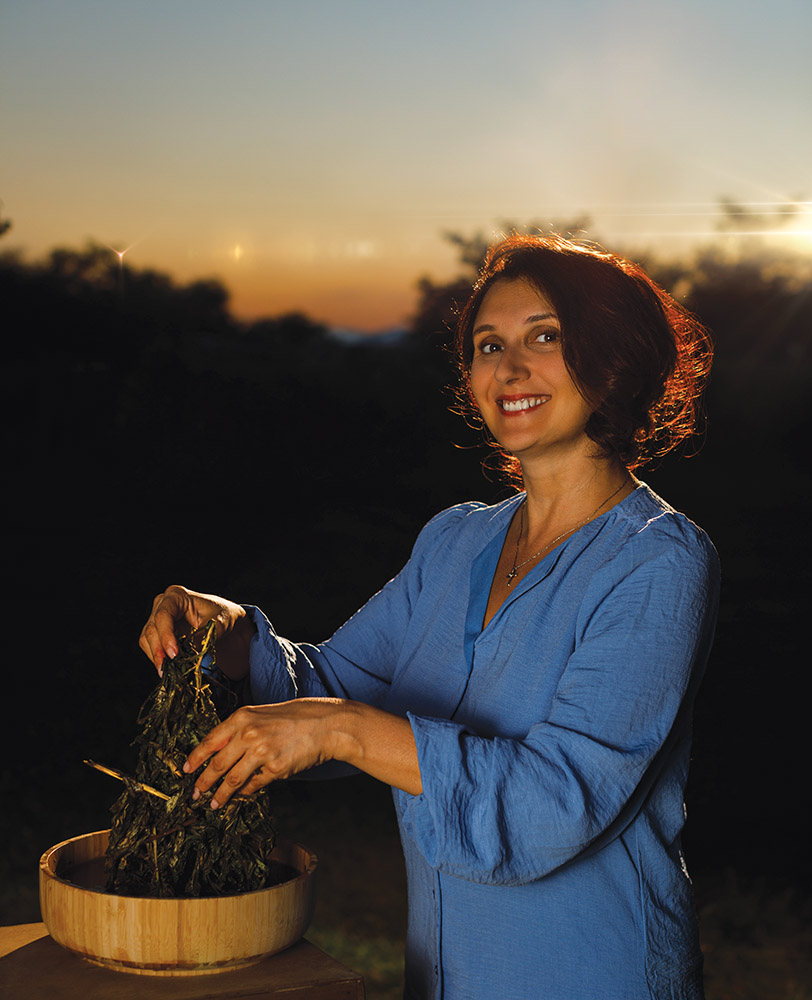
In October, Imereti is filled with the fragrance of damp leaves and mushrooms. Locals say they are ‘going mushrooming’, and indeed, the hunt begins at dawn in the Imeretian forests – with a basket, a walking stick, and a careful stride, known only to those who understand the language of mushrooms.
In this region, mushrooms are more than mere food – they are a connection to nature, a seasonal ritual, and a taste carried from childhood. Almost everyone here knows how to identify the safe-to-eat varieties – miklio (chanterelle), niqvi (Caesar’s mushroom), chado (saffron milk cap), and kama (field mushroom).
Gathering mushrooms – or, as locals call it, ‘hunting’ – is not just a pastime; it is a family affair. In the morning, father and son head into the forest, while the grandmother warms the ketsi (a clay pan placed on hot embers) at home, awaiting their return. By the time they come back, chopped onions and coriander are ready, and the ketsi is prepared to roast the season’s first mushrooms. This is the rhythm of life here, filled with astonishing aromas and flavours.
Niqvi – Imereti’s Golden Delicacy
The most prized catch of all is niqvi – bright orange, shiny, and velvety. Niqvi (Amanita Caesarea), also known as Caesar’s mushroom, was once a favourite of Roman emperors, from whom it takes its name. It was considered a rare and valuable food, reserved only for imperial tables.

Niqvi grows abundantly in Imereti, particularly in the forests of Kharagauli, Sachkhere, and Chiatura. Locals gather it with great care. The niqvi harvest begins here in late August and continues into early autumn.
If the mushrooms aren’t heavily soiled, it’s best not to wash or soak them, as doing so robs them of their delicate flavour. Mushrooms act like sponges, absorbing water easily, so each one should be carefully wiped with a damp cloth, excess dirt removed, and left to dry individually. Once cleaned, they can be roasted whole or roughly chopped in the oven, or gently cooked in a pan, preserving their natural aroma and texture.
When cooked, niqvi releases its own natural oils, and a simple sprinkle of salt is enough to enjoy it. It can also be sautéed in butter or lard, but nothing else is needed – no spices, no pepper. In Imereti, they say that niqvi is so rich in flavour that it requires nothing extra. Its taste is the perfect harmony between the earth and sun.
Miklio and Kama – The Forest in Everyday Life
Miklio, sometimes called ‘chicken thigh,’ is a mushroom served daily in Imeretian households. Sautéed in oil with onions and a touch of coriander, it pairs perfectly with mchadi – a traditional Georgian cornbread – baked in a ketsi. This mushroom also complements game birds, such as partridge. In Baghdati, Imereti, we prepared miklio fried in butter on a pan, served alongside roasted partridge, flavoured with garlic and coriander crushed in a mortar.


Kama is often mistaken for the common cultivated mushroom, as it belongs to the same family. It grows wild in meadows and grassy areas, which is why it is sometimes called the ‘wild mushroom.’ Its cap is white or slightly darker, and the young mushroom’s gills are pale pink, gradually darkening to a blackish-brown. Its flavour is more intense, with earthy notes, than that of cultivated mushrooms. When foraged from the wild, kama can often simply be sprinkled with salt and eaten raw.
Cultivated Kama Mushroom – Grown in Greenhouses
Kama has long become part of contemporary cooking and has secured its place on restaurant menus. Local chefs prepare it with wine and a mint sauce, in a dish known as ‘samarkho chakapuli’, which literally means ‘fasting chakapuli.’ The mushrooms are sliced and layered in a serving dish, seasoned with coriander, tarragon, green onions, mint, black pepper, and salt between the layers, then marinated in wine. Kama mushrooms are also found in khinkali or stuffed inside a pie. Grilled, they are served as a side dish with meat or poultry.
Varka and Chado
Varka (porcini) and Chado (saffron milk cap) are inhabitants of the wild forest. Varka has a slightly bitter taste, so it is boiled twice to soften the flavour, then cooked with walnuts and fresh coriander. Chado is more delicate and can even be eaten raw. At the end of summer, it is prepared as a special dish for guests – sautéed in oil with fresh herbs.
Both mushrooms are distinguished by their unique texture and aroma. Varka is typically picked at the end of summer, in September, while Chado is available from late May through the end of October.
Machkvala
At the end of autumn, when the forest cools and the soil becomes damp, machkvala (honey fungus) appears, a golden mushroom that grows in clusters at the base of trees. Its preparation is simple: sautéed in oil with a little garlic and black pepper, which is more than enough to bring the forest’s aroma to the table.


Machkhvala is often preserved for the winter, either salted or pickled. During the cold season, it is dressed with walnuts and vinegar, seasoned with plenty of garlic, fenugreek, and dry coriander. Even on the winter table, it carries the scent of Imereti’s damp forests.
Tree Mushroom – Kalmakha
Kalmakha (oyster mushroom) is a staple of daily life in the Kakheti region. It can be foraged in the forest almost year-round. At the Telavi market, you can buy it and sauté it in butter with plenty of fresh herbs and red onions. It pairs especially well with mint. Kalmakha is also used to make a delicious mushroom chakapuli.
Kharispashva, Datvis Soko, and Truffles – Delicacies of Fine Dining
I must mention kharispashva (morel), which grows abundantly in the Borjomi-Kharagauli forests. A few years ago, while organising a gastro forum, a Michelin-starred chef requested morel mushrooms for a dish. We thought these mushrooms could not be found in our country, but we soon realized he was talking about kharispashva. We laid out our country’s treasure – the full list of local mushrooms – before the chef.
Morel Mushrooms – A Favourite in Fine Dining
Morel mushrooms enjoy special popularity in high-end restaurants around the world. During the gastro forum, the chef sautéed kharispashva (morel) in butter, prepared an exquisite sauce with béchamel and lemon zest, and created a sample of molecular cuisine. The mushroom stood out for its meaty, rich flavour.
Having touched on high-end restaurants, it is essential to mention datvis soko (porcini) and truffles. In Georgia, datvis soko grows abundantly in the forests of Sabaduri and Tianeti. Porcini is one of the most prized mushrooms and holds a distinguished place in Spanish and French cuisine. Here in Georgia, it is typically cooked with onions, seasoned with fresh herbs to taste, and then enjoyed. While truffles are rare in Georgian cuisine, they can still be found in the country, particularly in the forests of Kojori and in areas where oak trees grow.


Truffles have an intense aroma and are an integral part of Italian cuisine. In Georgia, they have become established only in recent years, yet they have already earned a respected place in contemporary culinary practices.
Today, as regional cuisine once again takes centre stage, mushrooms have returned as a symbol of seasonality and a connection to nature.